Can You Learn a Skilled Trade Online? What Future Electricians, Plumbers, and HVAC Technicians Should Know
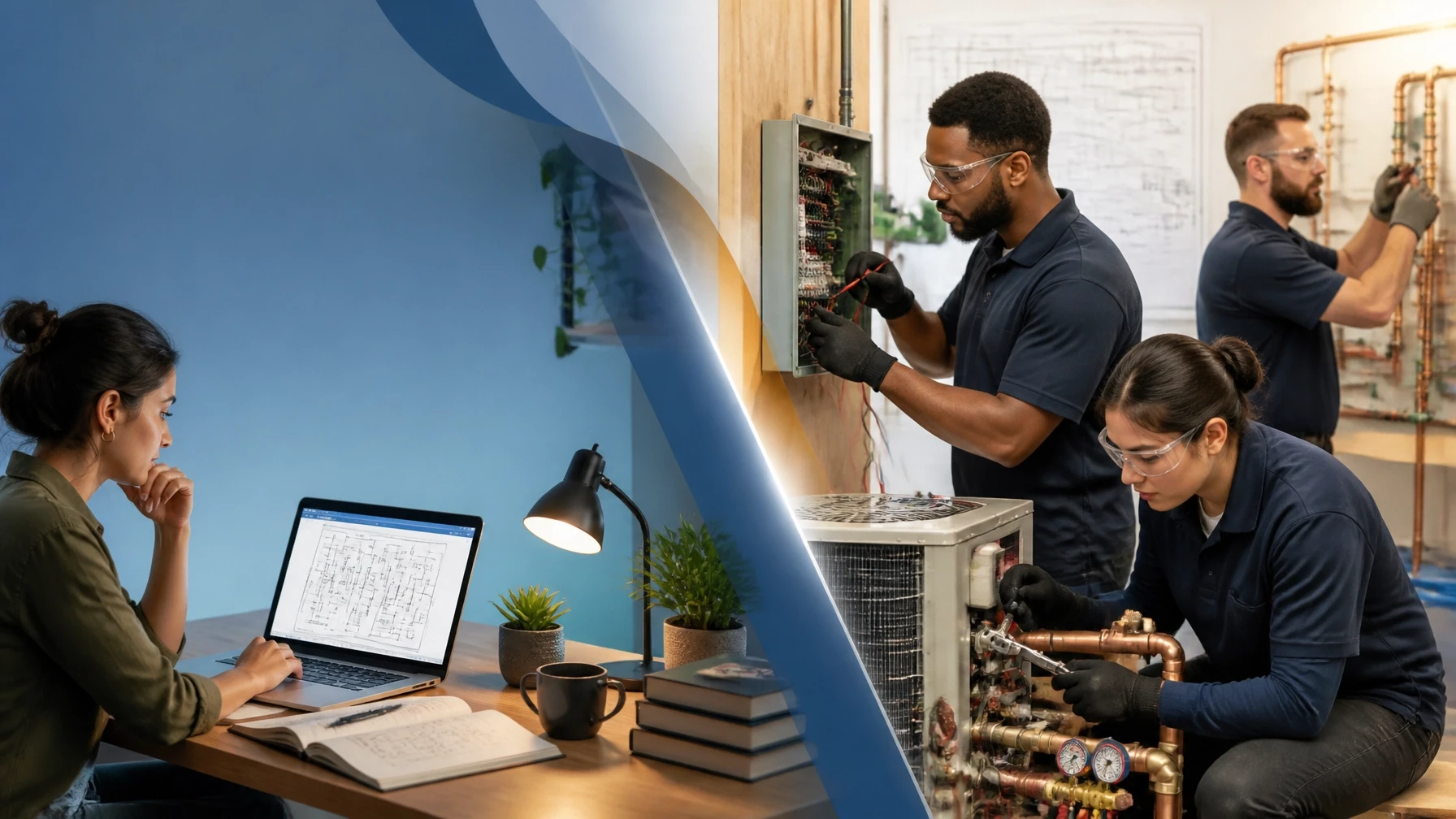
Online courses can teach important trade knowledge, but they usually cannot replace hands-on training, supervised experience, or local licensing requirements.
If you’re considering a career as an electrician, plumber, HVAC technician, mechanic, or construction professional, online education can be a useful place to begin. It can help you learn terminology, safety practices, tools, systems, calculations, and troubleshooting concepts before you enter a shop, job site, or apprenticeship.
But online learning has limits. Watching demonstrations and completing quizzes is not the same as working with tools, diagnosing a live system, installing materials, or performing a task under qualified supervision. In many locations, online coursework by itself will not satisfy the requirements for a trade license.
The right question is not simply, “Can I learn a trade online?” It’s more practical:
Which parts of this trade can I learn online, and what must I complete in person before I can work independently?
What online skilled-trade education can teach
Online courses are often most useful for the knowledge-based side of trade education. Depending on the course, you may study:
- Trade terminology and basic system components
- Workplace and job-site safety
- Tool identification and proper use
- Measurements and trade mathematics
- Reading diagrams, blueprints, and technical documentation
- Building codes and regulations at an introductory level
- Materials, fittings, equipment, and common installation methods
- Troubleshooting concepts and diagnostic sequences
- Customer communication and job documentation
- Preparation for certain exams or industry credentials
Interactive simulations can make online instruction more practical. A simulation may allow a learner to identify a faulty component, follow a diagnostic sequence, or practice reading a system diagram. That can build familiarity before the learner handles physical equipment.
Still, simulated practice does not establish the same competence as performing work on an actual electrical, plumbing, HVAC, automotive, or construction system. A course that explains how to complete a task is not necessarily authorized to certify you to perform it professionally.
That distinction should be clear before you enroll.
What usually requires hands-on instruction
Skilled trades involve physical judgment. You need to understand how materials behave, how tools feel in use, how systems respond, and how to work safely when conditions are not exactly like the examples in a lesson.
Hands-on learning may be required for:
- Installing, connecting, or repairing components
- Using specialized tools and testing equipment
- Working safely around electricity, gas, refrigerants, vehicles, or heavy equipment
- Identifying problems that are not obvious from a diagram
- Following local code requirements in real installations
- Completing work under supervision
- Demonstrating competence to an employer, apprenticeship sponsor, licensing authority, or testing organization
Hands-on experience can come through a trade school lab, community college, employer training, apprenticeship, pre-apprenticeship, or another approved practical setting. The acceptable route depends on the occupation and jurisdiction.
A credible online program should explain what it does, and does not, provide. Be cautious if a provider suggests that a short online course automatically makes you a licensed electrician, plumber, contractor, or HVAC professional.
Electrical training: online theory, in-person skill
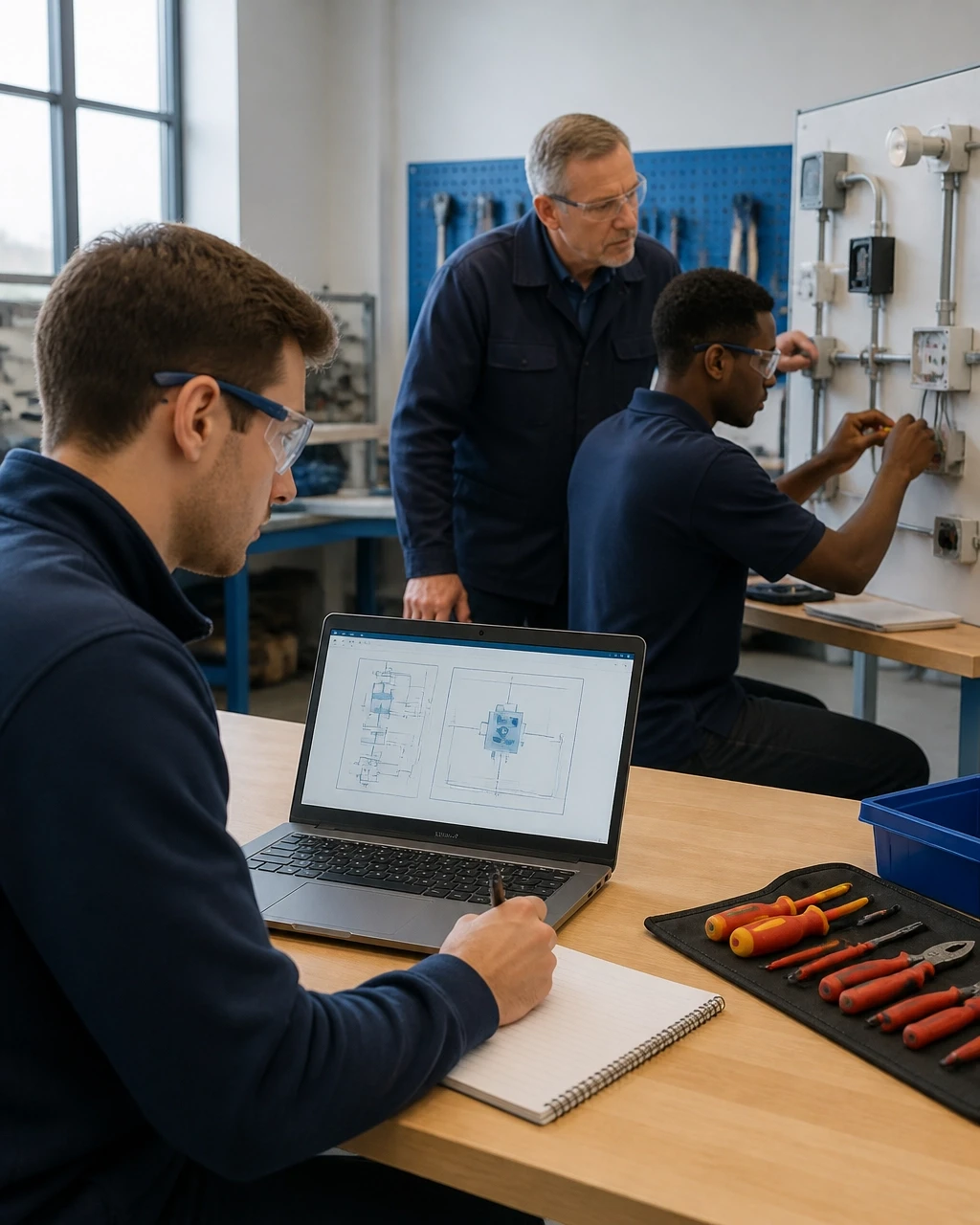
Electrical education can include substantial classroom theory. Online study may cover electrical principles, circuits, wiring methods, safety, calculations, diagrams, and introductory code concepts.
That foundation may help you prepare for an apprenticeship or understand technical lessons more easily. It may also help an experienced worker complete continuing education, where online instruction is accepted by the relevant authority.
The practical side is different. Electrical work involves real equipment, testing procedures, installation methods, safety decisions, and code compliance. Many jurisdictions require documented work experience, supervised training, an examination, or a combination of education and field hours before issuing a license.
Requirements are not uniform across the United States. Some rules are established at the state level; others may involve counties, cities, or local building departments. Before paying for an online electrician course, contact the licensing authority where you intend to work and ask:
- Is an apprenticeship or trainee registration required?
- How are field hours documented?
- Does classroom education need to come from an approved school?
- Which exams are required?
- Will this specific course count toward any requirement?
Do not assume that a certificate labeled “electrician” has the same meaning as a government-issued license.
Plumbing training: useful preparation, not a substitute for field work
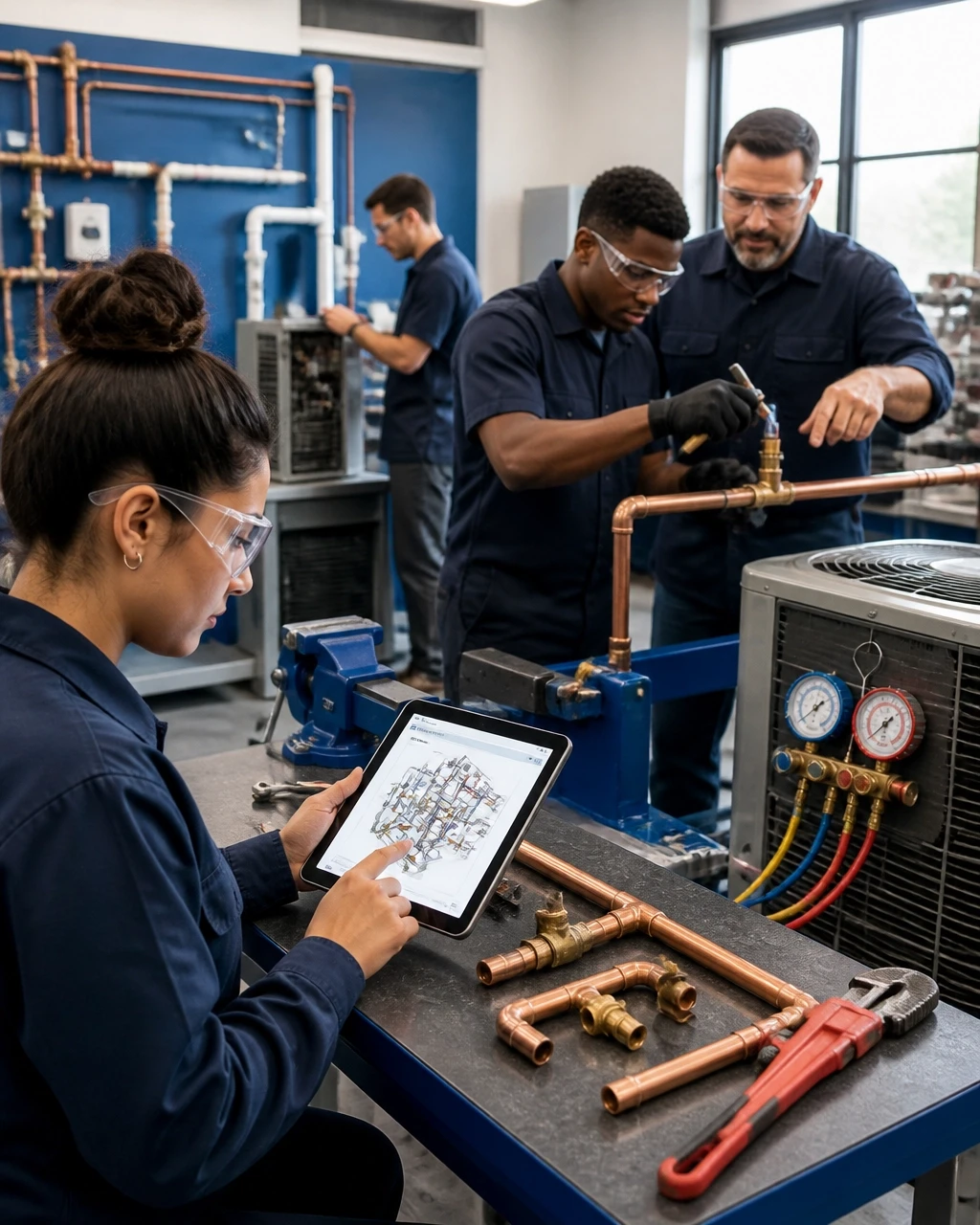
Online plumbing courses may introduce pipe materials, fittings, drainage and supply systems, fixtures, tools, safety, and basic troubleshooting. This knowledge can be useful for someone exploring the trade or preparing for an entry-level helper position.
Plumbing also requires physical practice. Learners need to work with actual pipe, connections, tools, equipment, and job-site conditions. Small installation errors can create leaks, contamination risks, code violations, or property damage.
In many locations, plumbing is regulated. A person may need to enter an apprenticeship, work under supervision, complete specified experience requirements, and pass an exam before advancing to a journeyman or contractor-level license. The terminology and sequence differ by jurisdiction.
Online education may support the classroom portion of that path, but whether it counts officially must be confirmed with the state or local authority. A provider’s statement that a course is “career-focused” or “license-exam preparation” does not automatically mean the course satisfies local licensing rules.
HVAC training: distinguish technical education from refrigerant certification
HVAC education can be well suited to a blended format. Online lessons may cover refrigeration cycles, heating and cooling components, electrical controls, airflow, tools, maintenance procedures, and diagnostic principles.
Simulations can also help learners practice decision-making before working on equipment. But HVAC technicians still need experience with actual systems, instruments, wiring, airflow, pressure readings, installation conditions, and customer environments.
Federal requirements may apply to technicians who handle refrigerants. The U.S. Environmental Protection Agency’s Section 608 information explains the federal program governing refrigerant handling for stationary refrigeration and air-conditioning equipment. Certification and testing details should be checked directly with the EPA and the organization administering the exam.
State, county, or municipal rules may impose additional requirements for HVAC work or contracting. Some areas may regulate mechanical work differently from electrical or plumbing work. Verify the rules where you plan to work rather than relying on a national course description.
What about construction, automotive, and other trades?
Not every skilled trade follows the same licensing model.
Construction
Online courses can help with construction safety, blueprint reading, estimating concepts, project documentation, materials, and introductory building methods. Practical construction ability still develops through supervised projects and job-site experience.
Contractor licensing, if applicable, can depend on the state, trade classification, project value, insurance requirements, examinations, and documented experience. Verify the rules with the relevant licensing board or building department.
Automotive
Online automotive education can explain engine systems, diagnostics, electrical fundamentals, maintenance procedures, and parts identification. It may also prepare a learner for certain exams or entry-level shop work.
However, diagnosing and repairing vehicles requires physical access to vehicles, tools, scan equipment, lifts, and experienced supervision. Employer expectations and certifications vary by specialty and location.
Other trades
Welding, machining, cosmetology, massage therapy, medical support occupations, and similar fields may have their own practical assessments, safety rules, licensing requirements, or employer standards. Online theory can be valuable, but the acceptable balance between online and in-person education must be checked individually.
Apprenticeships connect education with work
For many learners, an apprenticeship offers a more complete pathway than an online course alone. The U.S. Department of Labor describes Registered Apprenticeship as a model combining paid work experience, mentorship, progressive training, classroom instruction, and an industry credential.
You can explore official information through Apprenticeship.gov’s career-seeker resources and search opportunities through its apprenticeship finder. Local employers, unions, contractor associations, technical schools, and workforce agencies may also provide information about available programs.
An online course can sometimes help you prepare for an apprenticeship interview or entrance assessment. It may also make classroom instruction less intimidating. But it should generally be viewed as one part of a broader training plan, not as proof that you have completed supervised trade experience.
How to evaluate an online trade program
Before enrolling, ask the provider:
- What skills and subjects does the curriculum actually cover?
- Is the course designed for exploration, entry-level preparation, exam preparation, continuing education, or another purpose?
- Does it include a physical lab, tool kit, workshop component, or required in-person assessment?
- Does the program lead to a recognized credential, or only a school-issued certificate?
- Is the credential accepted by employers or licensing authorities in your area?
- Does the program help students locate apprenticeships, or does it make no such promise?
- What are the total tuition, materials, exam, and technology costs?
- What happens if you cancel or withdraw?
- Are licensing claims clearly limited by state and local differences?
The practical answer
Yes, you can learn meaningful parts of a skilled trade online. Online education can provide theory, safety knowledge, terminology, study support, and preparation for the next step.
For most hands-on trades, however, it is unlikely to be the entire pathway to independent professional work or licensure. Electrical, plumbing, and HVAC careers may involve apprenticeships, supervised hours, practical assessments, exams, and state or local licensing. Construction and automotive paths may have different requirements, but they still depend heavily on physical practice and employer expectations.
Treat online training as a tool. Confirm the rules before enrolling, choose a course whose claims match its actual purpose, and plan for the hands-on experience your trade requires.
Thinking about an online skilled-trade program? Start by writing down the occupation and location you’re targeting. Then check the licensing authority, apprenticeship options, required exams, hands-on expectations, and total cost before comparing courses.